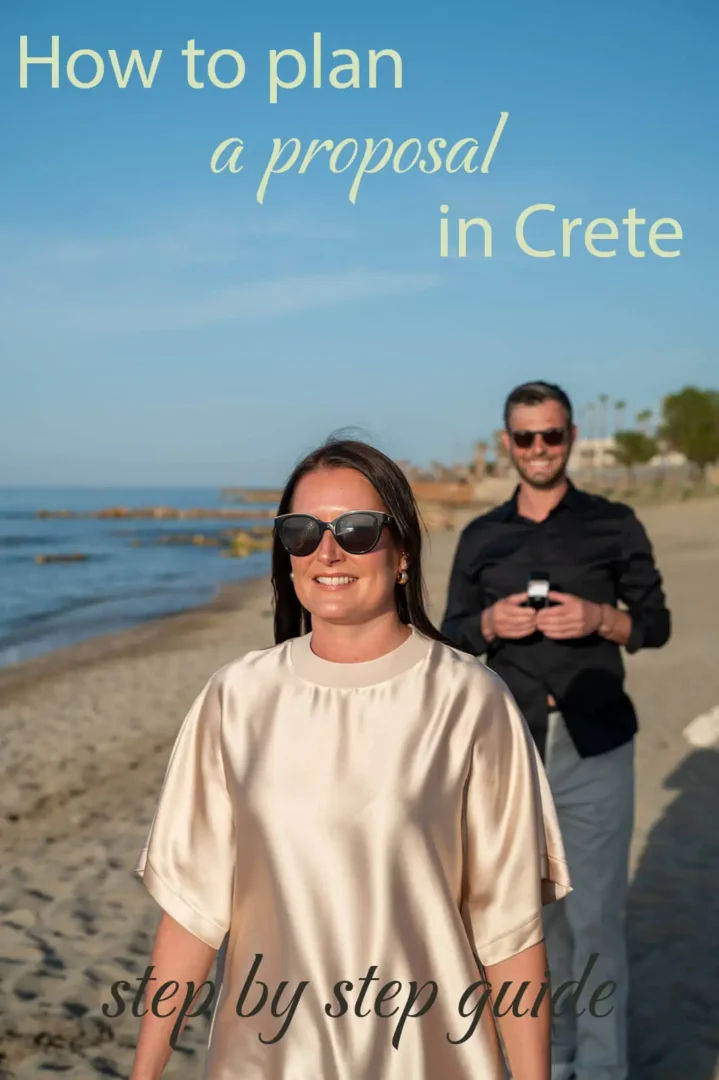
How to Plan a Proposal in Crete (Step-by-Step Guide)
There’s a moment, just before everything changes.
You’re walking together — maybe along the sea, maybe somewhere quiet you chose without saying why. The light is soft, the air feels different, and for a few seconds… everything slows down.
She doesn’t know yet.
You do.
And somewhere between the sound of the waves and the feeling in your chest, you realize something simple but powerful:
this moment will stay with you forever.
Planning a proposal in Crete isn’t just about finding a beautiful location. It’s about creating a moment that feels natural, personal, and real — something that reflects your story, not a staged version of it.
And that’s where most people get it wrong.
It sounds simple… but it rarely is
At first, planning a proposal in Crete seems easy.
Beautiful beaches, incredible sunsets, endless locations… what could go wrong?
In reality, this is where most people underestimate what it takes.
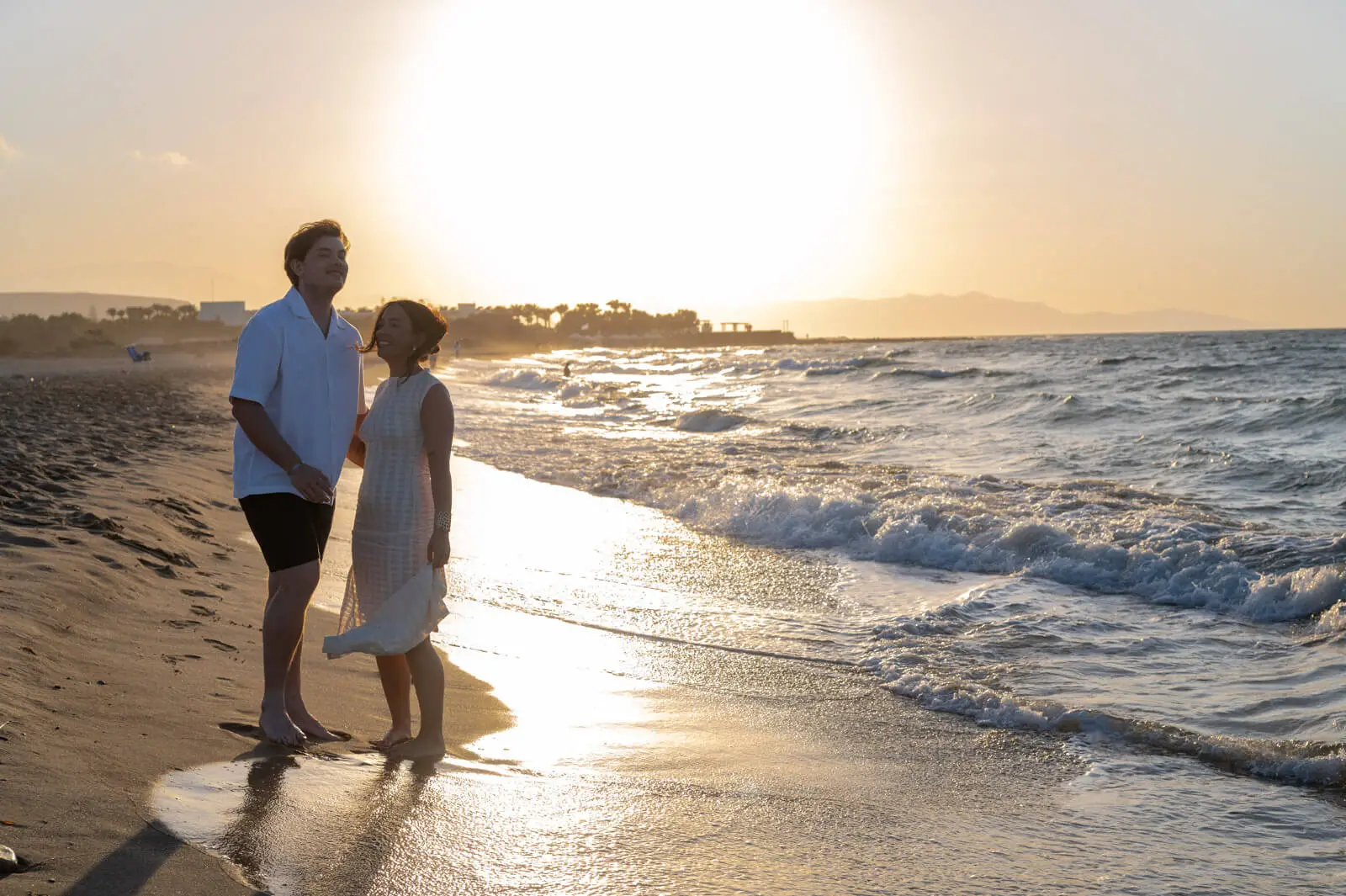
The wrong timing can turn a perfect sunset into harsh light.
A crowded beach can take away the intimacy of the moment.
A poorly chosen spot can feel exposed instead of personal.
And sometimes, trying too hard to make it “perfect” ends up making it feel staged.
What makes a proposal truly unforgettable isn’t just the view.
It’s how the moment feels — natural, effortless, and deeply personal.
That’s why planning it properly matters more than most people expect.
Local Expert Tip
After helping couples plan and photograph surprise proposals across Crete for many years, we’ve learned that the location itself is only part of the experience. The proposals that feel the most natural are usually the ones where everything has been planned in advance—from the timing and privacy to the small details that allow you to stay focused on the moment instead of worrying about logistics.
If you’re still deciding where to propose, our guide to the Best Places to Propose in Crete will help you compare beaches, viewpoints and secluded locations across the island.
How to plan a proposal in Crete — step by step
1. Start with the feeling, not the location
Most people begin by searching for the “best place” — but the truth is, the location comes second.
Think about how you want this moment to feel.
Quiet and intimate? Playful and relaxed? Cinematic and emotional?
Crete offers endless options, but the right choice is the one that reflects your relationship — not just a beautiful backdrop.
—
2. Choose the right timing (this changes everything)
Light is everything.
The difference between a harsh, crowded afternoon and the softer light before sunset is not just visual — it completely changes the atmosphere.
For most outdoor proposals in Crete, the best moment is usually before the actual sunset, not exactly when the sun disappears. This gives you softer light for the proposal itself and enough time afterwards to enjoy the moment and take a few relaxed photographs together.
Timing can also affect privacy. Arriving at the right part of the day can make a familiar beach or viewpoint feel completely different — calmer, softer and far more intimate.
A location can change with the season
Photos and recommendations online can show you what a place looks like, but not necessarily what you will find on the day of your proposal.
Beaches can change through the year. Winter storms may reshape the sand, access can change, vegetation grows, businesses open for the season, and a quiet spot in spring may feel very different in August.
For proposals where privacy or a specific setup matters, recent local knowledge can be more valuable than simply choosing a beautiful pin on a map.
When necessary, we prefer to check the location again closer to the date and keep a nearby alternative in mind rather than assume that conditions will be exactly as expected.
—
3. Prioritize privacy, not isolation
A private proposal doesn’t necessarily mean finding a completely empty beach.
In Crete, especially during the warmer months, even beautiful secluded-looking locations can have other people around. What matters more is choosing the right part of the location, arriving at the right time and planning how you will move through the area.
Sometimes walking just a little further from the obvious access point is enough to change the atmosphere completely. In other cases, a short route with more than one possible proposal spot gives you the flexibility to avoid people without making the plan feel complicated.
The goal is not absolute isolation. It is to create enough space around the two of you for the moment to feel personal.
If privacy is one of your main priorities, the Best Places to Propose in Crete guide compares different settings and the kind of experience each one can offer.
Discreet does not always mean hidden
A photographer does not necessarily need to be completely hidden for the proposal to remain a surprise.
On an open beach or coastline, trying to hide someone with a camera can actually make the plan more complicated. A better approach is often to make the photographer’s presence feel completely natural — as another visitor, someone enjoying the beach, or simply part of the surroundings.
What matters is that your partner has no reason to connect that person with the proposal.
This also gives the photographer more freedom to choose a good angle and capture the reaction naturally, without forcing you to stand on one exact mark or follow a complicated sequence.
—
4. Keep it natural — avoid overplanning
One of the most common mistakes is trying to control every detail.
Where to stand.
Where to look.
What to say.
When to turn.
Too much planning can make the proposal feel like a performance instead of a real moment.
The better approach is to plan what actually matters — the location, timing, photography and a few possible options — while leaving enough freedom for the proposal itself to unfold naturally.
Sometimes that means planning a route rather than one exact proposal spot.
For Jonathan and Michelle’s proposal in Tabakaria, Chania, we identified several possible locations along a short walk instead of deciding exactly where the proposal had to happen.
The important parts were planned in advance. The final few metres were not.
That small amount of flexibility allowed Jonathan to choose the place when the surroundings and the moment felt right.
Make the journey to the location believable, too.
If reaching the proposal spot requires a long drive, an unusual detour or visiting somewhere your partner would not normally choose, think about how the day will make sense from their perspective.
A beautiful location is not useful if getting there makes the surprise obvious.
Whenever possible, build the proposal naturally into something you could genuinely have planned together — a beach visit, sunset stop, dinner nearby or an area you already wanted to explore.
The explanation does not need to be elaborate. In fact, the simpler and more believable it is, the better.
—
5. Have a backup plan — without planning a second proposal
Crete is known for its sunshine, but coastal conditions can change quickly — and strong wind is often more important than a little cloud.
A backup plan does not necessarily mean choosing a completely different location or preparing two separate proposals.
Sometimes it is as simple as having another spot nearby, changing the exact position on the beach, adjusting the timing slightly or choosing a more sheltered part of the coastline.
This is especially important if you are planning flowers, candles, fabric, a picnic or another romantic setup, because wind can affect details that would not matter during a simple proposal.
The aim is not to plan for every possible scenario. It is to have enough flexibility that unexpected conditions do not become the focus of the day.
—
6. Decide how you want to remember it
Proposal photography does not have to turn the experience into a photoshoot.
The goal is usually the opposite: to document the moment without becoming part of it before the proposal happens.
How that works depends on the location.
On an open beach, the photographer may be able to work from a discreet distance with a longer lens. In a busier public place, it can be more natural to blend into the normal activity of the area rather than trying to hide completely.
A proposal we photographed at Aposelemis Beach worked with the first approach. The walking direction, approximate proposal area, timing and photographer position were agreed in advance, allowing the couple to arrive naturally while the photographer remained well away from them.
Another approach is to make the photography itself part of the surprise.
For Daviyo and Desteney’s proposal at Stalos Beach in Chania, Desteney arrived believing they were simply meeting us for a couple photoshoot. We began with a few photographs together before Daviyo proposed.
This meant there was no need for the photographer to hide. The camera already had a natural reason to be there, while the real purpose of the session remained a surprise.
This approach can be particularly useful in an open setting where trying to conceal a photographer completely could feel less natural than simply giving their presence a believable reason.
You can see how the plan worked in their real surprise proposal at Stalos Beach, Chania.
After the proposal, the photographer can approach and the experience can continue with relaxed portraits together.
The important part is not making the photographer invisible at any cost. It is choosing an approach that suits the location and allows the proposal itself to remain the focus.
—
7. Add something personal — if it belongs there
A proposal does not need decoration to feel special, but the right detail can make the experience feel much more personal.
That might be a bouquet, champagne, a small picnic, a handwritten note or a romantic setup prepared before you arrive. For some couples, those details become an important part of the experience. For others, the location itself is enough.
The important question is not how much you can add.
It is whether what you add feels natural for the two of you.
A quiet beach can work beautifully with a prepared setup and somewhere to celebrate afterwards. A place with strong scenery or character may need almost nothing at all.
The best proposal style is the one that feels intentional without feeling borrowed from someone else.
Proposal Planning Checklist
Before your proposal day, make sure you’ve covered the essentials:
- ✓ Choose the right area based on where you’re staying.
- ✓ Decide whether you prefer privacy or an iconic location.
- ✓ Plan the proposal around the best light, not just sunset time.
- ✓ Decide if you’d like discreet photography or photography and video.
- ✓ Consider adding flowers or a romantic setup.
- ✓ Have a nearby alternative in case of strong wind, crowds or unexpected conditions.
- ✓ Make sure the journey to the location feels natural and does not give away the surprise.
- ✓ Keep the surprise relaxed—simple plans usually create the most genuine reactions.

Common mistakes to avoid
Even a well-planned proposal can become unnecessarily complicated when a few practical details are overlooked.
Choosing a location for the photo, not the experience
A spectacular view is not automatically the right proposal location.
Think about how you will arrive, how exposed the spot feels, whether the surroundings suit your partner, and what happens immediately after the proposal.
Planning the proposal for the exact sunset time
If you wait until the sun is actually disappearing, you may have very little useful light left for the reactions and photographs that follow.
Plan around the sunset — not only the sunset itself.
Assuming a quiet-looking location will be empty
Photos rarely show the full reality of a place.
Access points, nearby hotels, beach bars, season and time of day can all affect privacy. Build some flexibility into the plan rather than depending on one spot being completely empty.
Adding details because proposals are “supposed” to have them
Flowers, champagne and a romantic setup can be wonderful when they suit the experience.
They are not requirements.
Choose the details your partner would genuinely appreciate, rather than recreating someone else’s proposal.
Making the plan too complicated
Every additional instruction is something you have to remember while trying to enjoy one of the most emotional moments of the trip.
Plan the important parts well, then leave enough freedom for the proposal to feel like a real moment rather than a sequence you have to perform correctly.
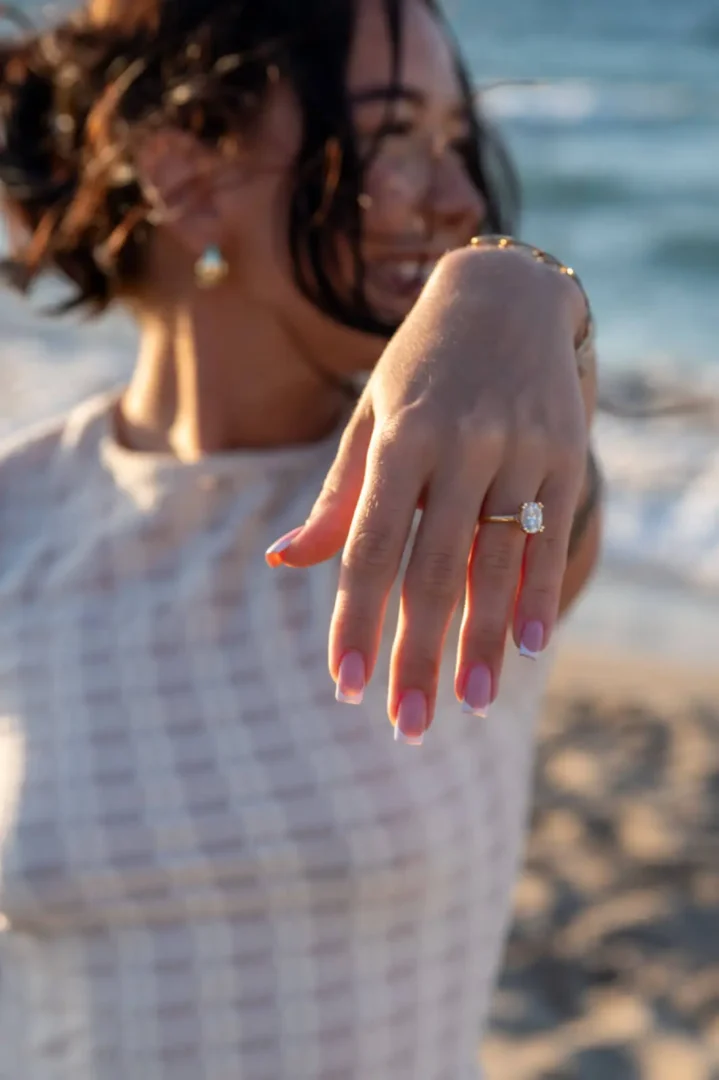
A Real Proposal Experience in Crete
“We had the most amazing experience and the proposal went exactly as planned thanks to Panagiotis and his lovely wife. The communication beforehand was excellent, Panagiotis and I went back and forth on email and had a video call well before the big day to make sure everything went smoothly. I was also given a bespoke price and felt reassured and trusted that what Panagiotis was going to deliver on he did! The day itself was amazing and Panagiotis was not only discreet and helpful, but made the day even more special with the set up and photography. I would highly recommend his service to anyone :)”
— Harry Bacon
If you’d like this moment to feel truly yours
Planning a proposal is not just about organizing details. It’s about understanding the moment you want to create — and letting it unfold naturally.
If you’re thinking about proposing in Crete and you’d like guidance, I’m here to help you shape it in a way that feels real, personal, and effortless. Feel free to contact me to discuss your ideas.
From choosing the right location and timing to quietly capturing the moment as it happens, everything is designed around you — not a template.
You can explore more about proposal experiences in Crete or simply reach out to start planning something meaningful together.
Frequently Asked Questions
How far in advance should I plan a proposal in Crete?
There is no fixed rule, but planning earlier gives you more flexibility with the location, photography and any additional details you may want to arrange.
If your travel dates are already confirmed, you can start planning even if you haven’t chosen the exact proposal spot yet.
Do I need to know the exact proposal location before contacting a photographer?
No. Knowing where you will be staying, your travel dates and the kind of experience you have in mind is usually enough to begin.
The exact location can be chosen afterwards based on privacy, scenery, accessibility and the style of proposal you want.
What happens if the weather changes?
Flexibility is one of the most useful parts of the plan.
If strong wind, rain or other conditions make the original spot unsuitable, the solution does not always have to be a completely different location. Sometimes moving to a more sheltered part of the coastline, using a nearby alternative or adjusting the timing is enough.
This is one reason why having some flexibility around the exact proposal spot can be so useful.
Should I choose a romantic setup or a natural location?
Both can work beautifully.
A romantic setup can become part of the experience on a quiet beach, while a location with strong scenery or character may need very little decoration.
The better choice is the one that feels more natural for your partner and the kind of proposal you want to create.
Can a surprise proposal still feel natural if a photographer is present?
Yes. The photographer does not necessarily need to be completely hidden.
Depending on the location, they may work from a discreet distance or simply blend naturally into the surroundings without giving away the surprise.
The important part is planning the general area, timing and approach beforehand, while leaving the actual proposal free to unfold naturally.
Start Planning Your Proposal
Let’s create something real and personal together.