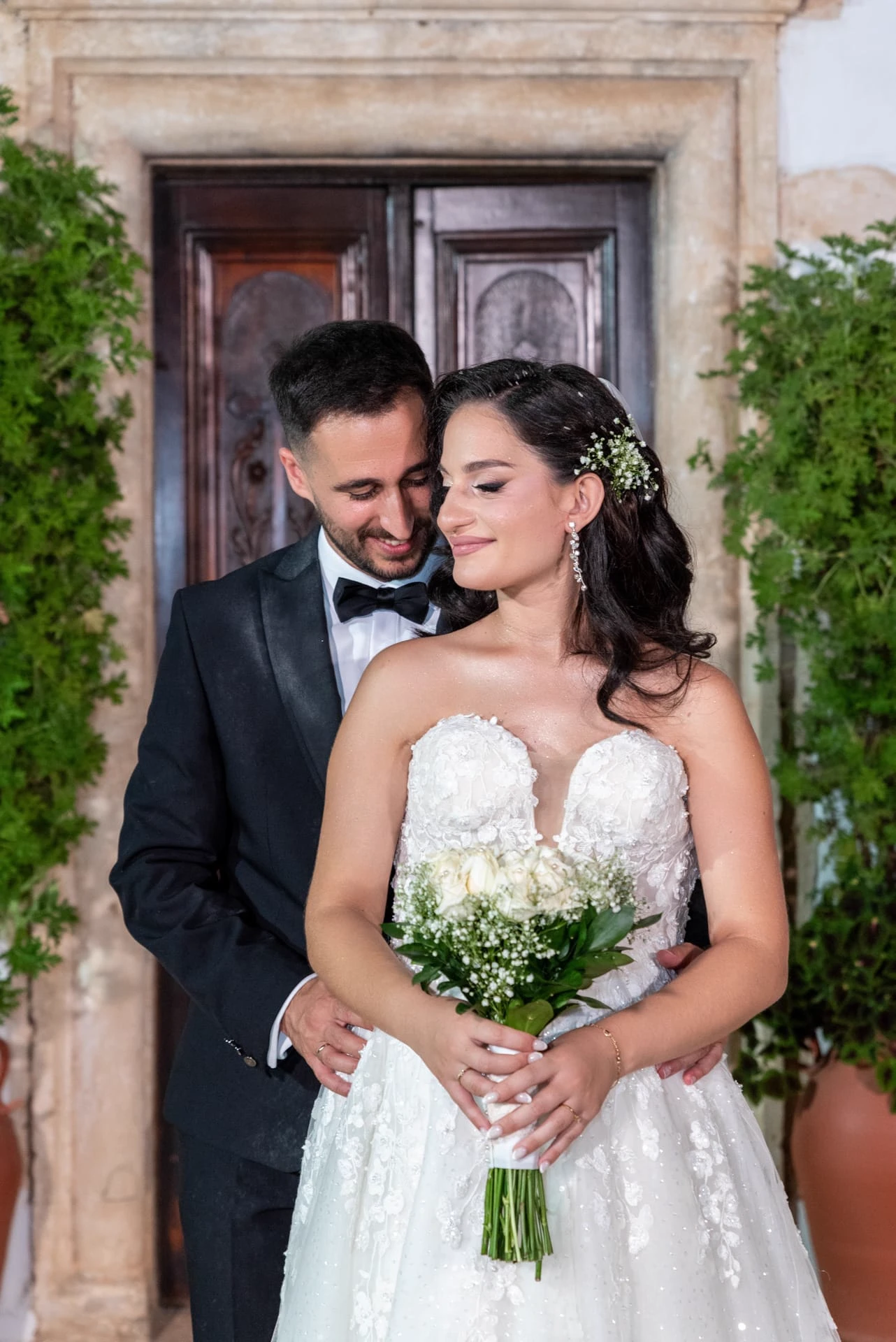
Choosing a wedding church in Chania is not only about finding a beautiful building.
The setting around the church, its location within the region, the available space, the atmosphere of the ceremony and the way the day continues afterwards can all shape the experience.
Some churches feel closely connected to the city. Others are part of a village, a hillside or a more distinctive historic setting.
For couples planning from abroad, those differences are not always obvious from photographs alone.
A church may look impressive online but still create practical questions around access, guest movement, travel time to the reception, portrait locations or the overall rhythm of the wedding day.
This is why choosing the right church is best treated as part of the wider planning process rather than as an isolated visual decision.
Through the weddings we have photographed across Chania and the surrounding region, we have seen how different churches can create very different ceremony experiences.
This guide looks at several real examples, the character of each setting and the practical factors couples should consider before making a final decision.
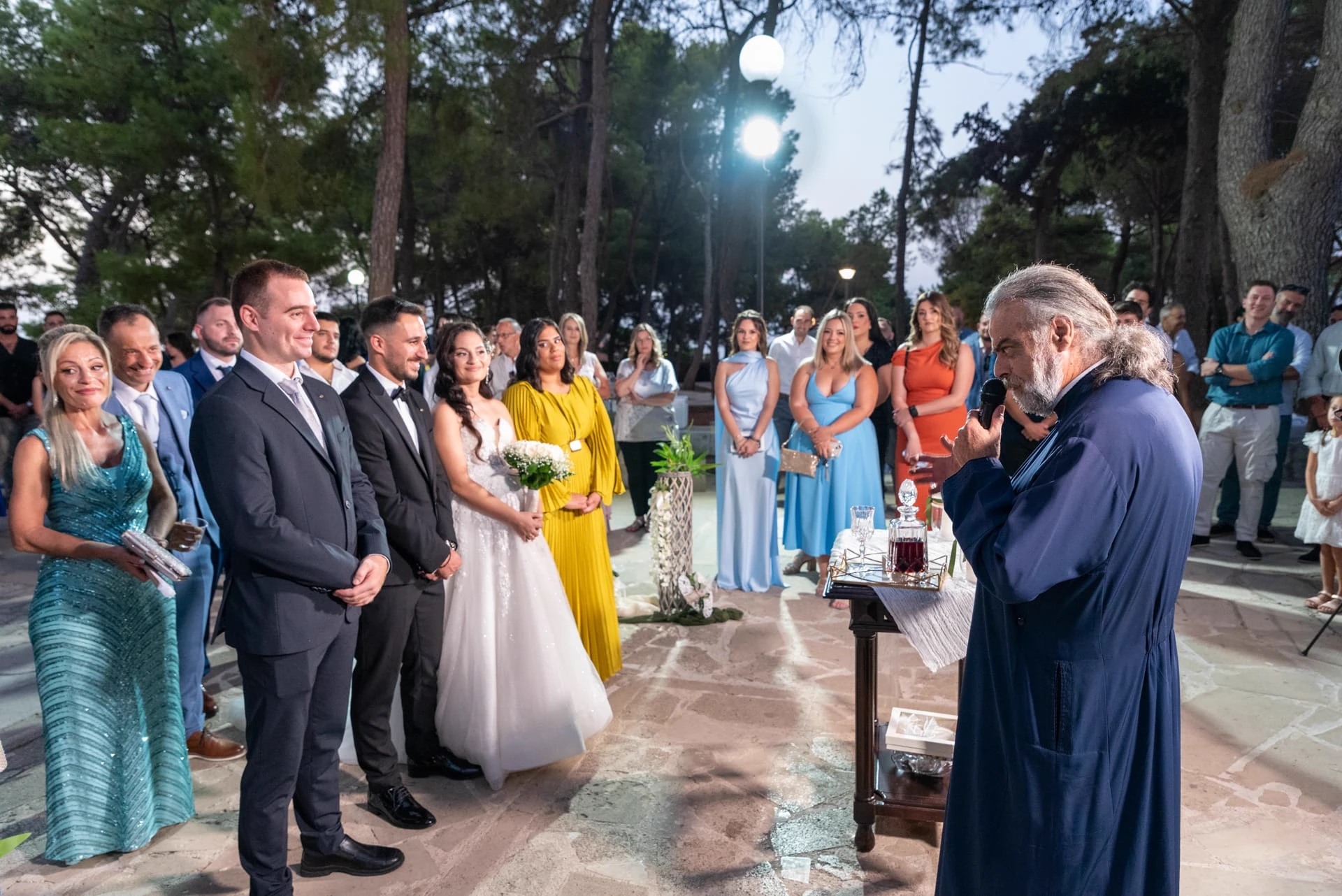
What couples should consider before choosing a wedding church in Chania
A beautiful church can be an important part of the decision, but the setting should also work for the wedding day as a whole.
The first practical consideration is location.
A church that is close to the couple’s accommodation or reception venue can make the day feel more relaxed, while a more remote church may offer a distinctive atmosphere but require additional travel time for the couple and their guests.
The surrounding space also matters.
Some churches have room for guests to gather comfortably before and after the ceremony, while others are more compact. This can affect arrivals, family photographs, congratulations after the ceremony and the transition towards the next part of the day.
Interior space and light can vary significantly as well.
A smaller church can feel intimate and closely connected to the people around the couple, while a larger church may allow more space for guests and more freedom of movement during the ceremony.
For photography, the available light, the position of the couple, the surrounding architecture and the space around the ceremony can all influence how the story is documented.
It is also worth thinking beyond the ceremony itself.
If portraits are planned immediately afterwards, the area around the church and the distance to the next location can become part of the decision. The same applies to guest transport, parking and the overall timing of the wedding day.
For these reasons, we recommend looking at the church as part of the complete wedding plan rather than choosing it only from photographs.
Before making a final decision, current practical details such as availability, parish requirements, access and any ceremony-specific restrictions should always be confirmed directly with the church or the professionals coordinating the wedding.
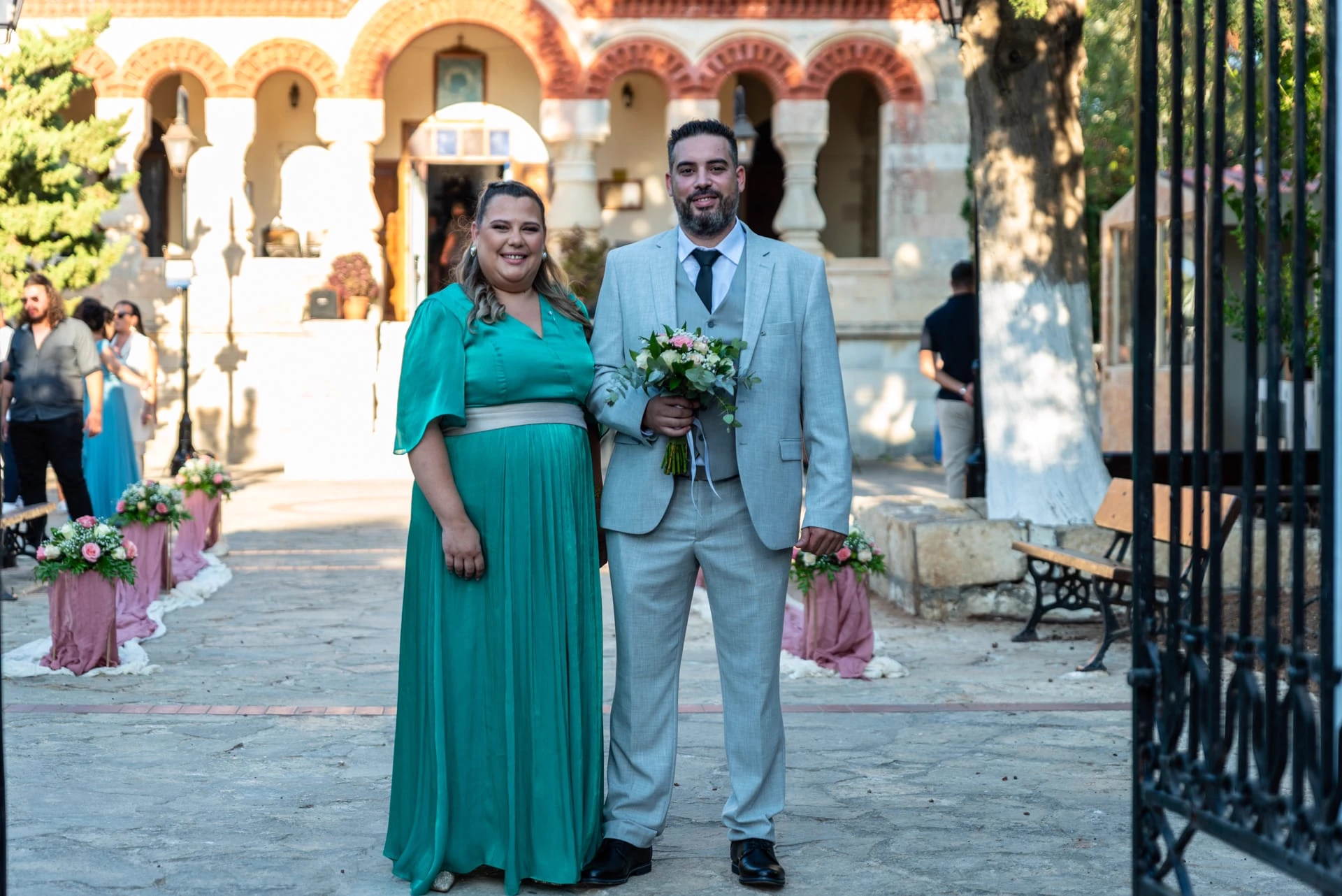
Profitis Ilias — Akrotiri
Profitis Ilias in Akrotiri offers a very different setting from a church within the city itself.
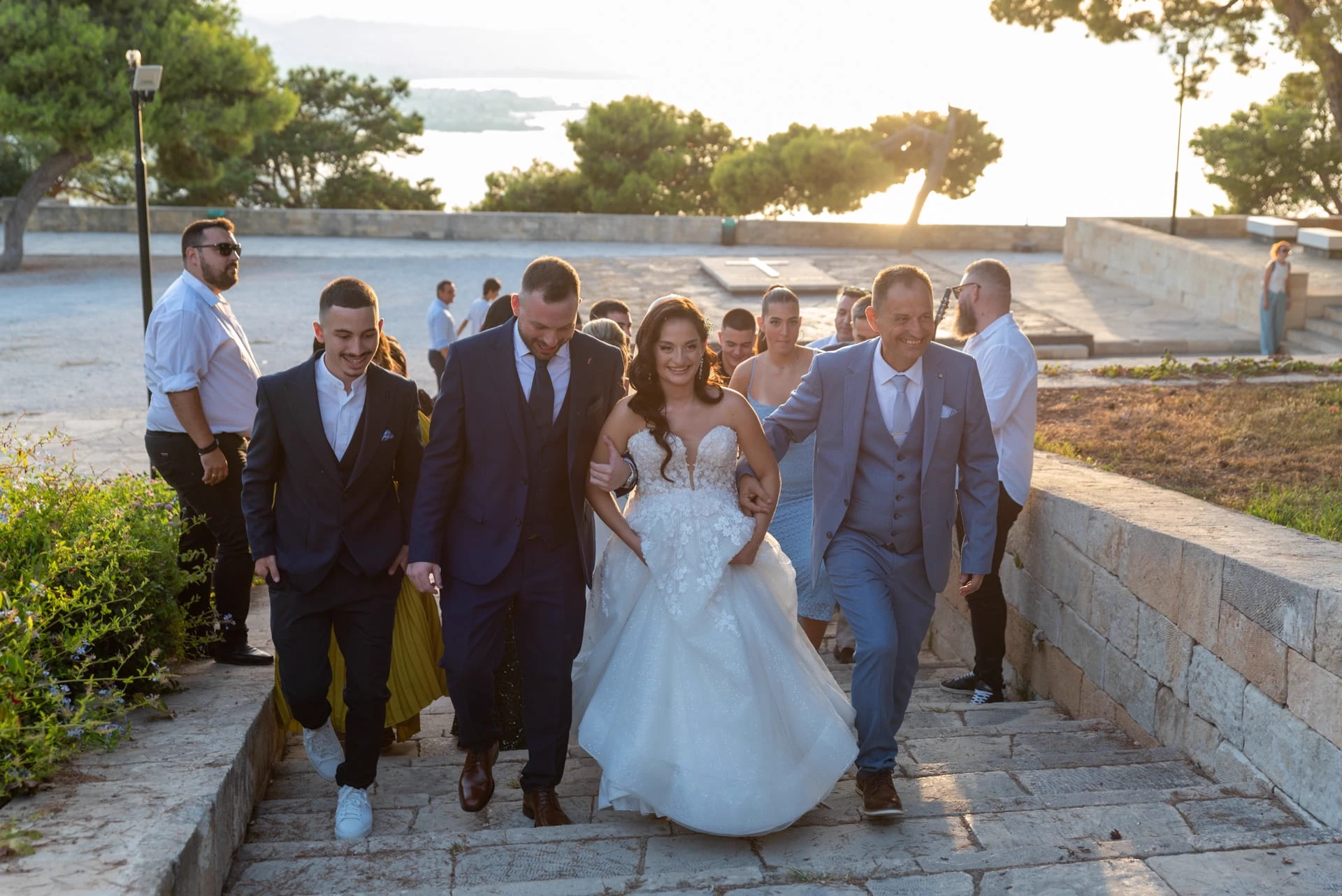
The church sits above Chania, surrounded by pine trees, with views towards the city below. That elevated setting gives the ceremony a sense of separation from the busier urban environment while still keeping it connected to the wider Chania area.
For couples, one of its strongest characteristics is the atmosphere around the church.
Guests are not arriving directly into a dense city street or enclosed neighbourhood setting. The surrounding landscape becomes part of the ceremony experience, particularly before the service begins and immediately afterwards.
From a photography perspective, that gives the church a strong visual identity.
The ceremony itself remains the centre of the story, but the pine trees, elevated surroundings and exterior space allow the location to appear naturally in wider photographs rather than disappearing behind the people.
We also have repeated real-wedding experience here, including Amalia & Antonis and Fotini & Giorgos, which makes Profitis Ilias one of the stronger church entities currently documented within our Chania wedding archive.
You can see how the setting works during a complete wedding in Amalia & Antonis’ Orthodox wedding at Profitis Ilias in Akrotiri.
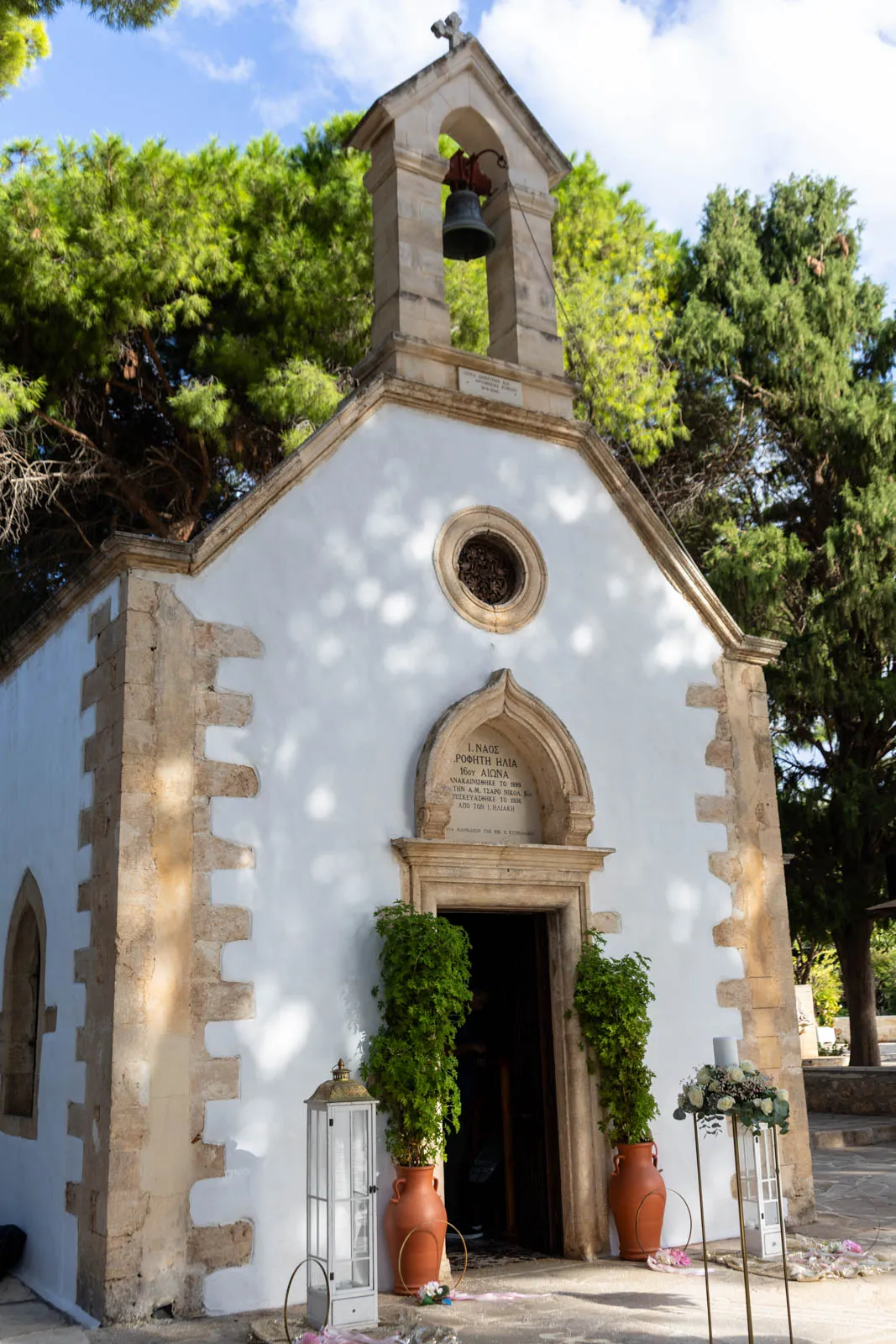
Saint John the Hermit Cave — Marathokefala
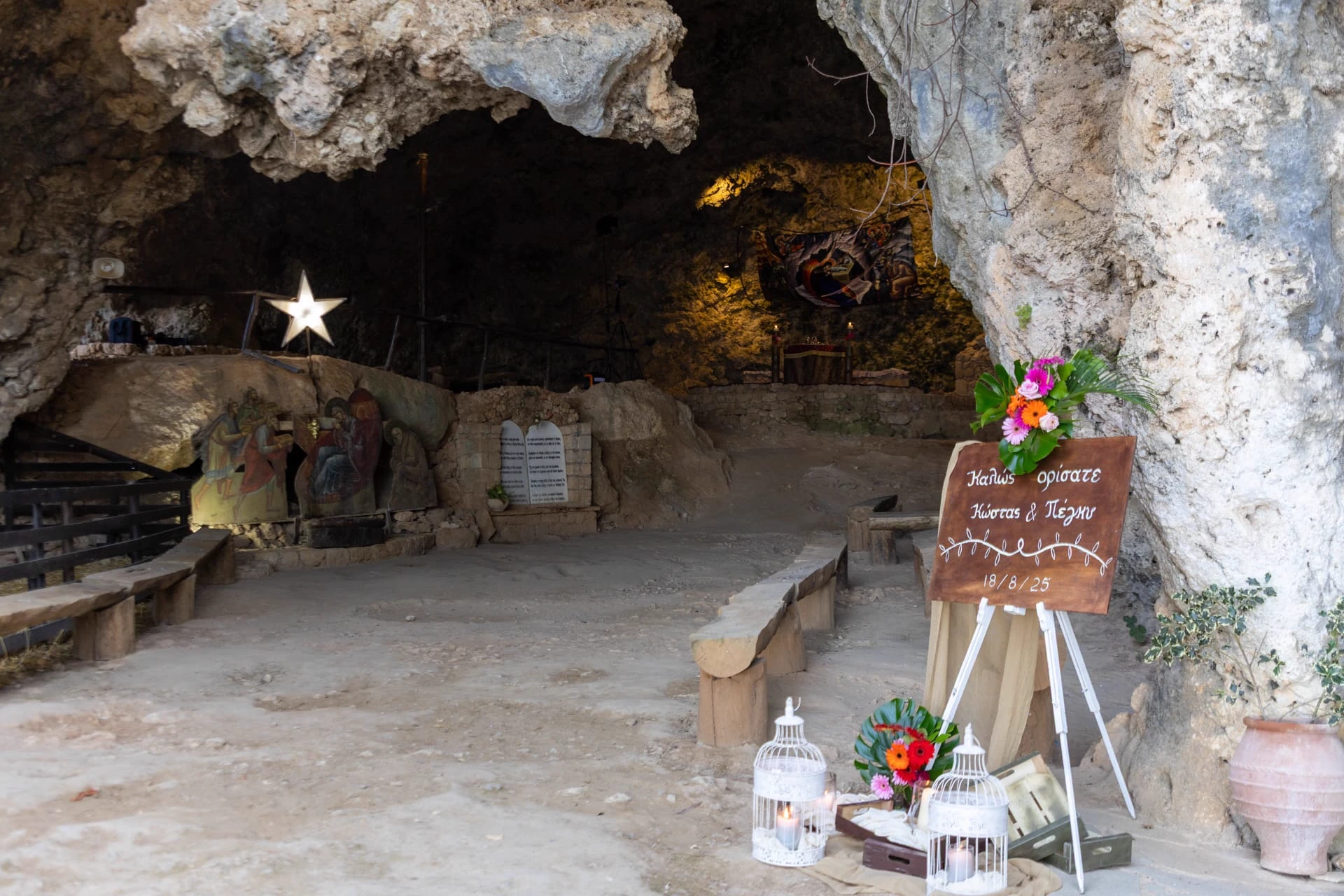
Saint John the Hermit Cave in Marathokefala creates one of the most distinctive church settings within the Chania region.
Unlike a conventional standalone church, the ceremony takes place within a cave setting, so the surrounding rock, enclosed atmosphere and religious space become part of the identity of the wedding itself.
That makes the experience feel very different from a city or village church.
For couples drawn to locations with a strong sense of place, this can be particularly appealing. The setting is memorable without depending on additional styling, and the environment naturally becomes part of both the ceremony and the photographs.
From a photography perspective, the cave environment also changes the way the ceremony is approached.
The architecture and available light become much more dominant than in a typical church interior, while movement and positioning need to adapt to the specific space rather than following a standard church layout.
Our current archive includes Peggy & Konstantinos’ wedding here, which gives us direct real-wedding evidence of how the location works during an Orthodox ceremony. The Wedding Knowledge Repository classifies Saint John the Hermit Cave as a strong church entity, while also noting that practical access and ceremony logistics should be verified again before publishing current planning advice.
You can see the location in context through Peggy & Konstantinos’ Orthodox wedding at Saint John the Hermit Cave.
For that reason, couples considering this church should treat its atmosphere and setting as the starting point, but confirm current access, ceremony arrangements and any practical requirements directly before making a final decision.
Panagia — Kounoupidiana
Panagia in Kounoupidiana offers a more local, residential setting than the churches we have looked at so far.
Because it sits within the wider Chania urban area rather than in a remote village or dramatic landscape, it can work well for couples who want the ceremony to remain closely connected to the rest of the wedding day.
That proximity can simplify the transition from preparations to the church and then towards portraits or the reception, especially when the rest of the wedding is also taking place around Chania.
The atmosphere is also different from a destination-style landmark church.
Here, the character comes less from dramatic surroundings and more from the sense of a real local parish setting, with family and guests gathering naturally around the church before and after the ceremony.
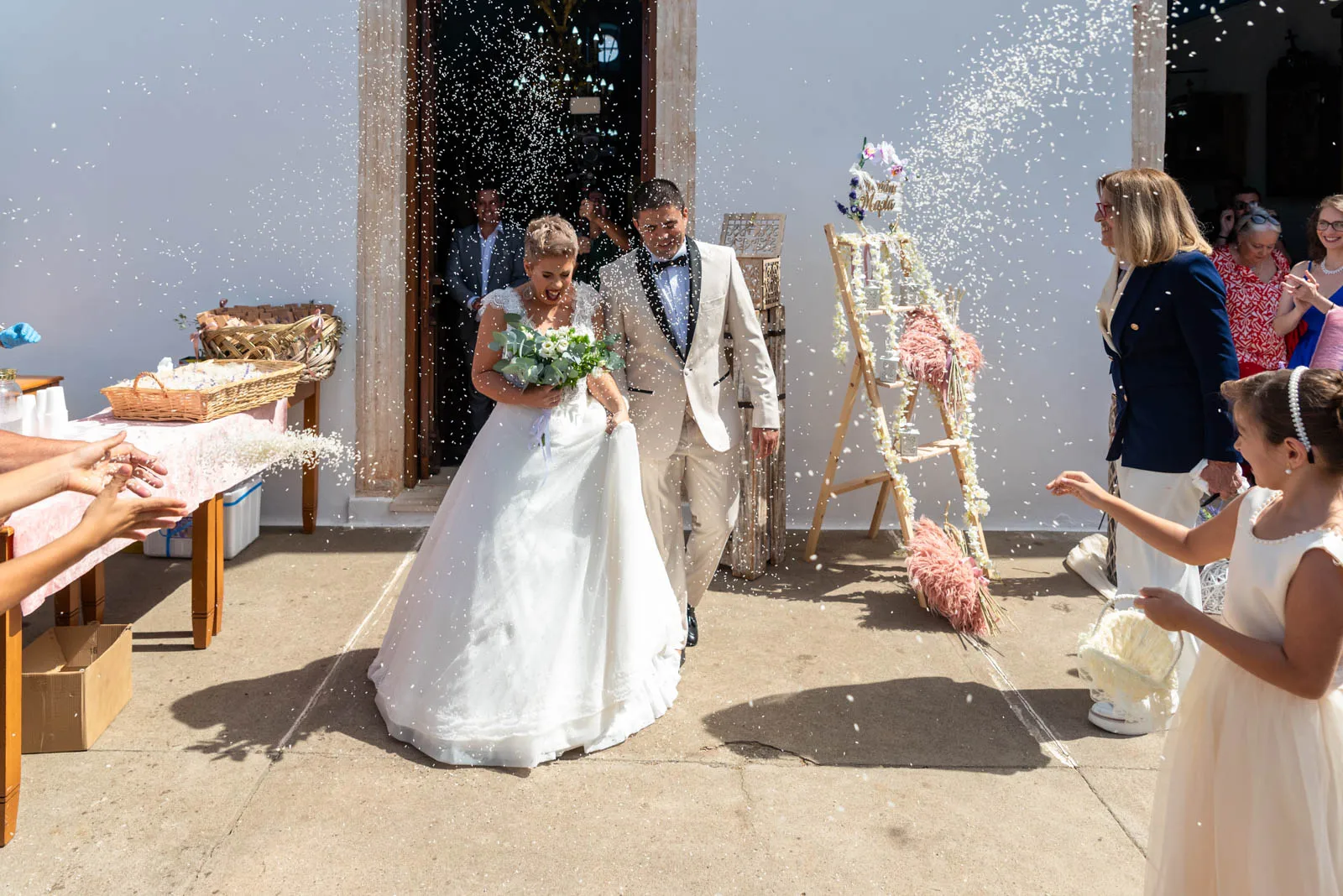
Our direct evidence comes from Maria & Michalis’ wedding, which the current Wedding Knowledge Repository records under Panagia — Kounoupidiana as a growing church entity.
You can see the church within the wider flow of the day in Maria & Michalis’ wedding in Chania. The current WordPress export confirms the Wedding Story and identifies photographs from Panagia Church in Kounoupidiana as part of that story.
For couples considering Panagia, the main question is not whether it provides a dramatic destination backdrop, but whether its location and local character fit naturally with the rest of the wedding they are planning.
Agia Magdalini — Halepa
Agia Magdalini in Halepa offers a very different kind of wedding setting: one that feels closely connected to Chania while still having a strong identity of its own.
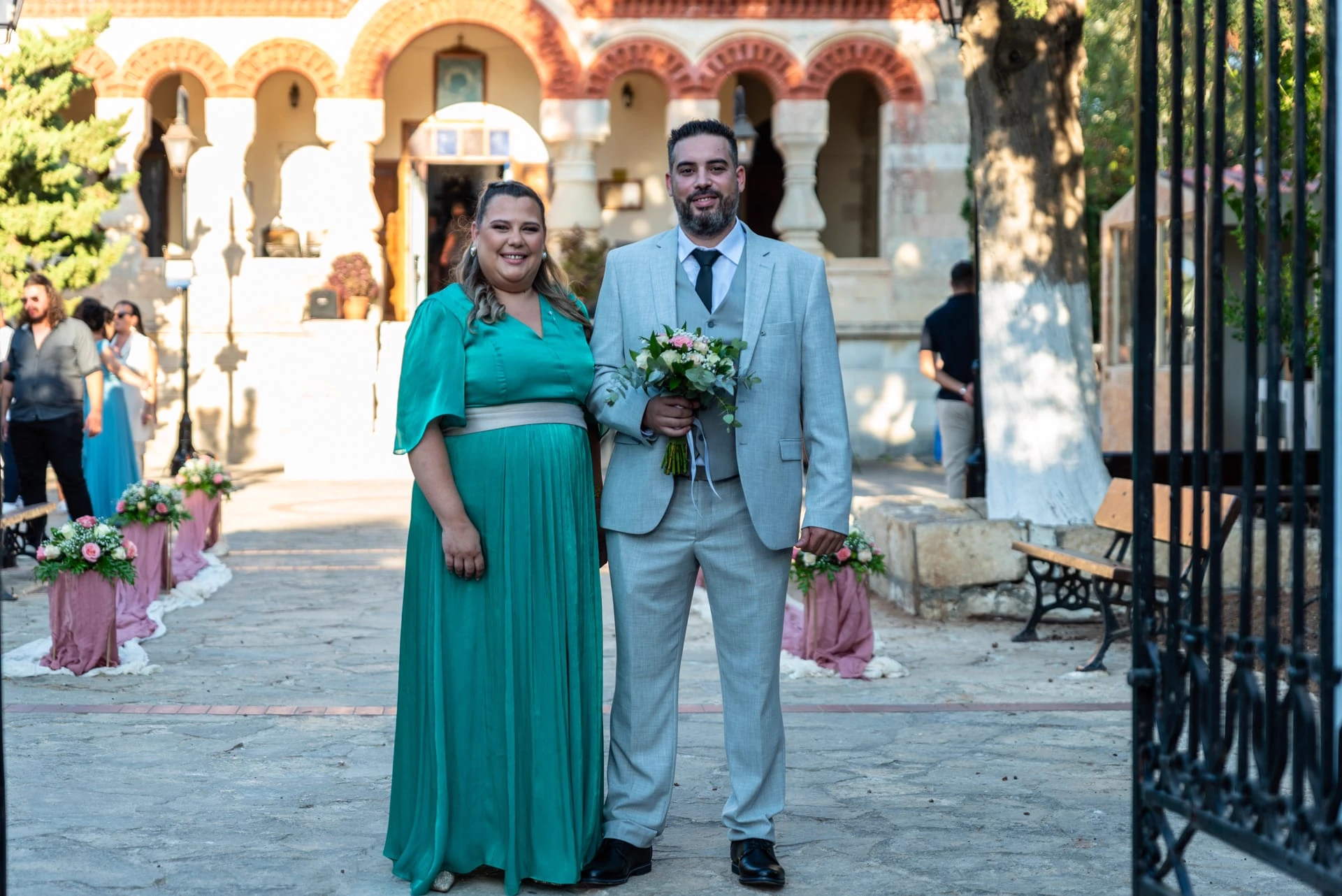
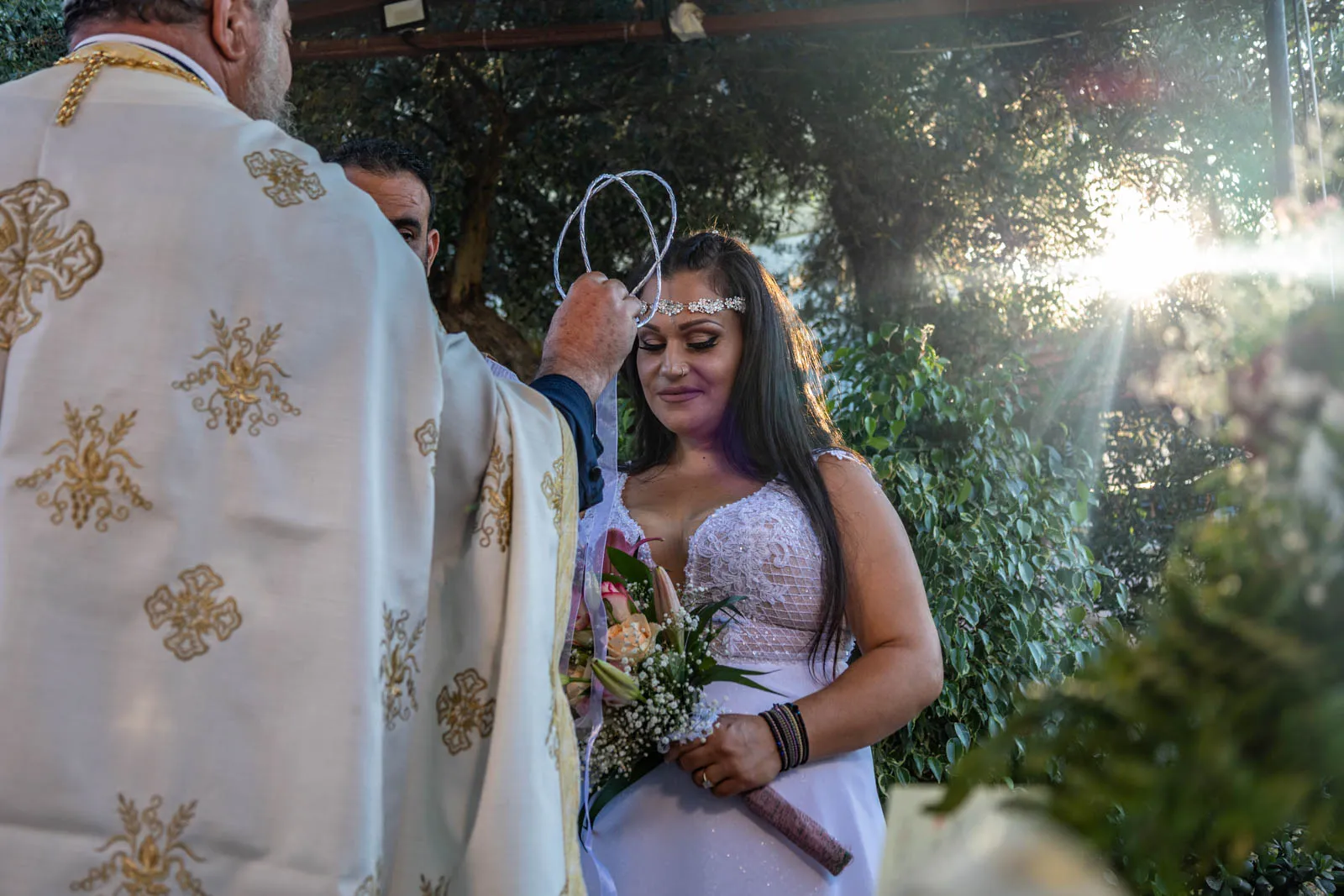
The church is surrounded by gardens and mature trees, and in the real wedding we have documented there, the Orthodox ceremony took place outdoors in the courtyard rather than inside the church. That changed the entire character of the ceremony, allowing the landscape, shade and surrounding architecture to become part of the experience itself.
For couples who want a church setting without feeling removed from the city, Halepa can be particularly interesting.
The area keeps the wedding connected to Chania, while the church surroundings create a calmer and more self-contained environment than a typical urban ceremony.
One of the strongest practical advantages we observed during Ioanna & Giannis’ wedding was that portraits could continue immediately around the church gardens. There was no need to move straight into another location after the ceremony, which allowed the transition from ceremony to portraits to feel natural and unhurried.
Our current Wedding Knowledge Repository records Agia Magdalini as a growing church entity, supported by Ioanna & Giannis’ wedding.
You can see the church, the outdoor ceremony and the wider flow of the day in Ioanna & Giannis’ romantic garden wedding in Chania.
Other churches we have photographed in the Chania region
Not every church needs a full profile to be useful in this guide.
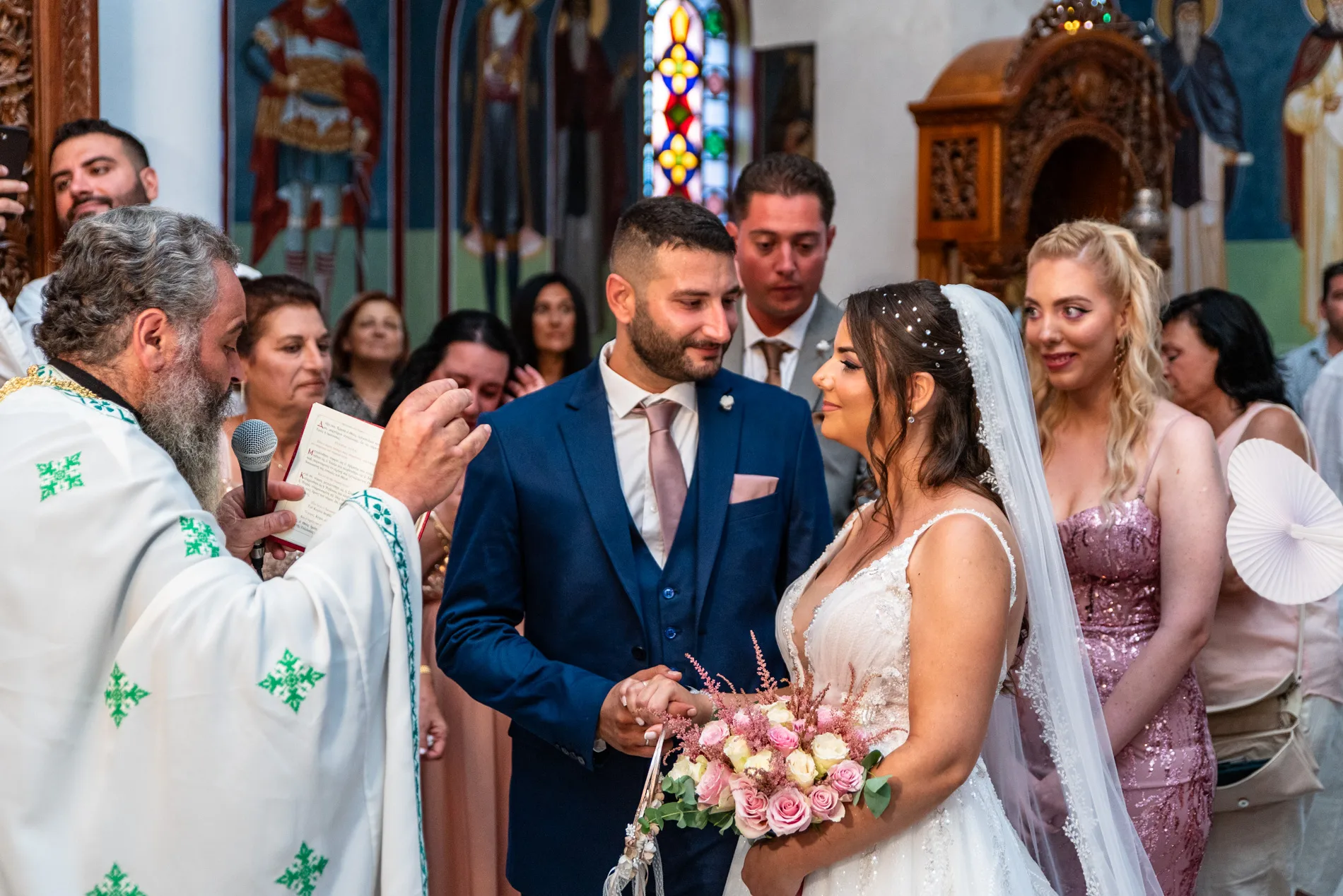
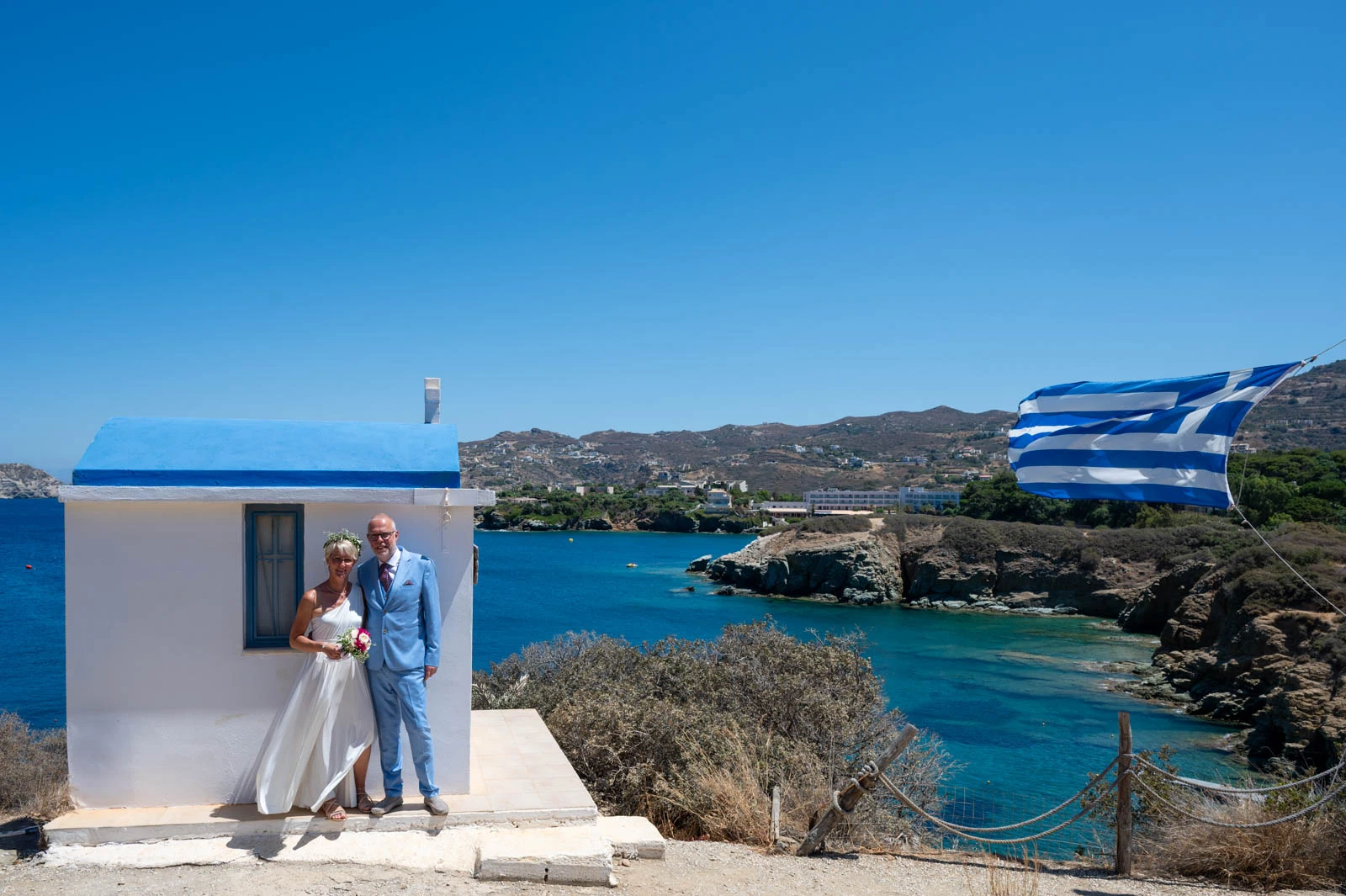
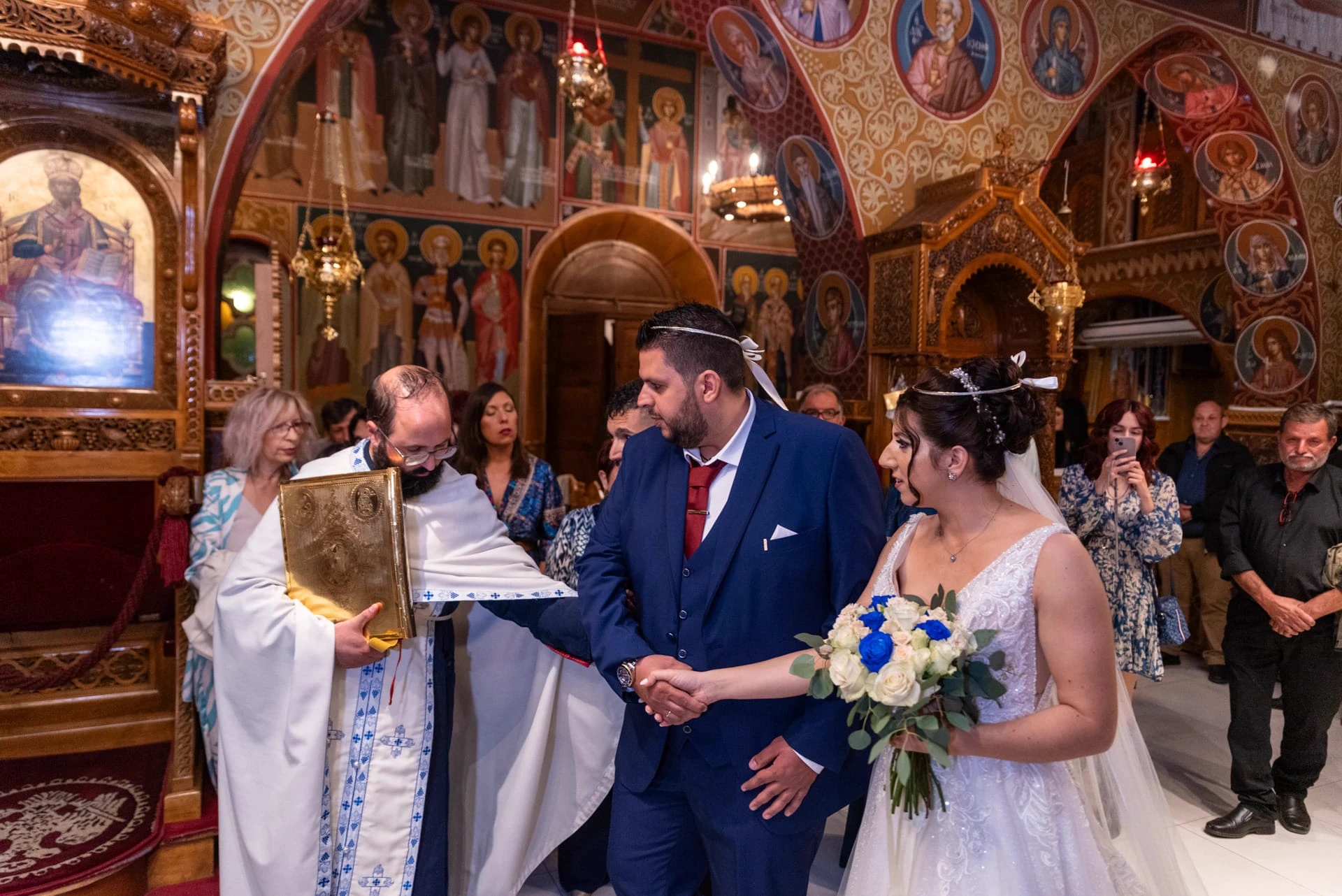
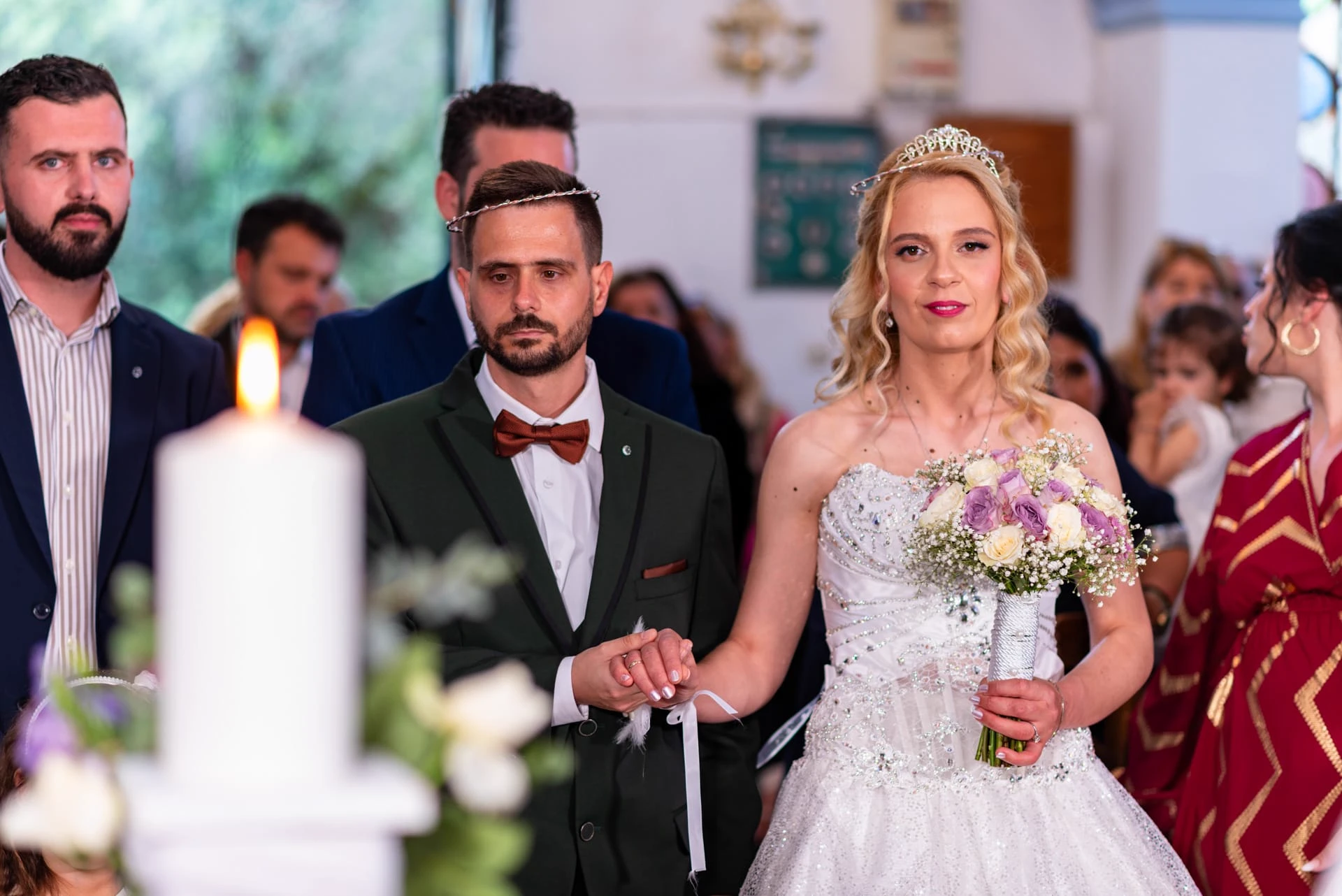
Our archive also includes weddings at several other churches across the Chania region, giving us additional evidence of how different ceremony settings can work in practice.
Agios Nektarios, Holy Asomatoi in Vafes and Timios Stavros in Kakodiki all appear in our current wedding archive, but the available evidence is not yet strong enough to justify treating them as equal full-profile sections within this article.
That distinction matters.
The purpose of this guide is not to create a long directory of churches, but to help couples understand the real differences between ceremony settings using locations we have actually experienced.
As our documented experience grows, some of these churches may eventually deserve their own dedicated section or guide.
For now, they are best treated as additional examples of the range available across Chania — from local parish churches to village and countryside settings.
City church, village church or countryside setting?
The right church setting depends on the kind of wedding experience a couple wants to create.
A city or suburban church can make the day more practical, especially when accommodation, portraits and the reception are all planned around Chania. Travel is usually simpler, guests remain close to the main parts of the day and transitions can feel more efficient.
A village church creates a different rhythm.
The surrounding streets, local community and landscape often become part of the wedding itself, giving the ceremony a stronger sense of place and a more traditional atmosphere. This can be especially appealing for couples who want the day to feel connected to Crete beyond the ceremony alone.
A countryside or more distinctive setting can offer the strongest visual separation from everyday surroundings, but it may also require more planning around transport, timing and guest movement.
None of these options is automatically better.
What matters is how the church fits the overall wedding plan: where the couple is getting ready, how guests will arrive, where portraits will take place afterwards and how long it will take to reach the reception.
For couples planning from abroad, looking at a complete real wedding can be more useful than judging a church from a single exterior photograph. Seeing how the ceremony, guests and surrounding locations work together gives a much clearer sense of whether the setting is right for the day you are planning.
How the church affects the rest of the wedding day
The church does not only define the ceremony itself. Its location can influence the rhythm of the entire wedding day.
Travel time is one of the first things to consider.
If the church, portrait location and reception are all relatively close to one another, the day can move naturally from one stage to the next. Longer distances can still work well, but they need to be accounted for in the schedule so that the couple does not lose valuable time between the ceremony and the reception.
This becomes especially important when portraits are planned after the ceremony.
A church with attractive surroundings can allow family photographs or a short couple session to begin immediately. In other cases, moving to a separate portrait location may be the better choice.
Light also matters.
The timing of the ceremony affects the quality of the light available afterwards, particularly during summer weddings in Crete. When the schedule is planned carefully, the transition from church to portraits can make use of softer late-afternoon or evening light rather than forcing the couple into a rushed session.
This is why the church should always be considered together with the wider wedding timeline.
Our guide to planning a wedding photography timeline in Crete explains how ceremony timing, travel and portraits fit together across the day.
For destination couples, that kind of planning can make a significant difference. A beautiful church is important, but the experience becomes much stronger when the ceremony location works naturally with everything that comes before and after it.
What should be verified before you make a final decision?
Some aspects of a church setting can be understood from photographs and previous wedding experience. Others need to be confirmed directly before the ceremony is booked.
Availability is the first.
A church may be suitable in terms of atmosphere and location, but couples should confirm that the preferred date and ceremony time are actually possible.
Parish requirements should also be checked directly.
These can vary, and current guidance should come from the church itself or from the professionals coordinating the wedding rather than from an older wedding example.
Access is another practical point.
Parking, walking distance, steps, guest movement and the way suppliers can reach the ceremony space can all affect how smoothly the day runs, especially when elderly relatives or larger guest groups are involved.
It is also worth asking whether there are any current restrictions around photography or videography, decorations, ceremony timing or use of the surrounding space.
Capacity can matter too.
A church that feels ideal for a small wedding may work very differently with a larger guest list, so couples should confirm that the space matches the scale of the ceremony they are planning.
The key point is simple: use real weddings to understand the atmosphere and visual character of a church, but verify all current practical details before making a final commitment.
See real weddings at churches in Chania
A single photograph can show what a church looks like. A complete wedding story shows how the location actually works during the day.
For that reason, real weddings are one of the most useful ways to understand a ceremony setting before making a decision.
You can explore several weddings we have photographed across the Chania region:
- Amalia & Antonis — Orthodox wedding at Profitis Ilias, Akrotiri
- Peggy & Konstantinos — Orthodox wedding at Saint John the Hermit Cave
- Maria & Michalis — Wedding in Chania with ceremony at Panagia, Kounoupidiana
- Ioanna & Giannis — Romantic garden wedding at Agia Magdalini, Halepa
Together, these stories show very different ceremony environments: an elevated church in Akrotiri, a cave setting in western Chania, a local parish church close to the city and a garden ceremony in Halepa.
Looking through the complete day is often more useful than comparing isolated church photographs, because it shows how guests arrive, how the ceremony unfolds, what the surroundings feel like and how the wedding continues afterwards.
Planning an Orthodox wedding in Crete?
Choosing the church is only one part of planning an Orthodox wedding in Crete.
The ceremony itself follows a distinct structure, with moments such as the exchange of rings, the crowning and the ceremonial walk around the altar forming part of the service. For couples planning from abroad, understanding that structure in advance can make the experience feel much more familiar before the wedding day.
If you want a clearer picture of how the ceremony unfolds and what matters most from a photography perspective, read our guide to Orthodox Weddings in Crete.
That guide focuses on the ceremony itself, while this article is designed to help with the separate decision of which church setting in Chania may suit your wedding best.
Together, the two resources give a more complete view of the planning journey: first understanding the ceremony, then choosing the setting in which it will take place.
Frequently Asked Questions
What should we consider when choosing a wedding church in Chania?
Look beyond the appearance of the church itself. Consider its location, access, surrounding space, guest movement, distance from the reception and whether the setting works with the overall rhythm of the wedding day.
Can destination couples have an Orthodox wedding in Chania?
That depends on the couple’s specific circumstances and the requirements of the church and parish involved. Because these details can change, couples should confirm current requirements directly with the relevant church or with the professionals coordinating their wedding.
Are all churches suitable for large weddings?
No. Church size, surrounding space and guest access can vary significantly. A setting that works beautifully for an intimate ceremony may not function in the same way with a much larger guest list, so capacity and practical arrangements should always be checked in advance.
Should we choose a church close to the reception venue?
Not necessarily, but distance matters. A longer journey between the ceremony and reception can work well if it is planned into the schedule. The important point is to account for travel time, guest movement and any portrait session planned after the ceremony.
Can photography and videography rules vary between churches?
Yes. The way photography or videography can be carried out may depend on the church, the priest and the ceremony setting. Couples should confirm any current restrictions before the wedding rather than relying on what was possible at a previous ceremony.
When should we confirm church availability?
As early as possible once the wedding date and general location are clear. Availability and ceremony times can affect the rest of the wedding schedule, so the church should ideally be confirmed before the timeline is finalized.
Planning your wedding in Chania?
Choosing the right church is one part of creating a wedding day that feels coherent from beginning to end.
The ceremony setting, travel between locations, portrait opportunities and the atmosphere of the surrounding area all influence how the day unfolds.
If you are still shaping the wider plan, explore our wedding planning guides on Love in Crete and use the real wedding stories on Patsiotis Photography to see how different locations and ceremony settings work in practice.
When the church, timeline and reception flow support one another, the day usually feels more natural for both the couple and their guests.
For a deeper look at the photography side of the experience, you can also explore wedding photography in Crete.